


Ultrapool
4.9106.00 Reviews
App Specs
- Version
- 0.14.13
- Updated On
- License
- Free
- Downloads
- 50,000+
- Developer
- offbrand games
- Categories
- Strategy
- Platform
- Android
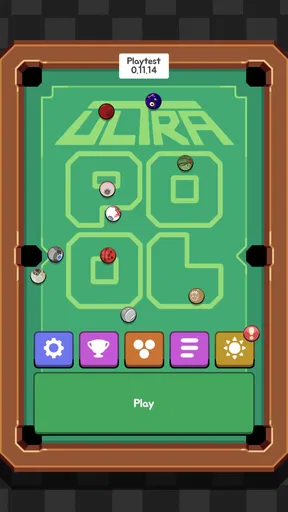
Screenshots
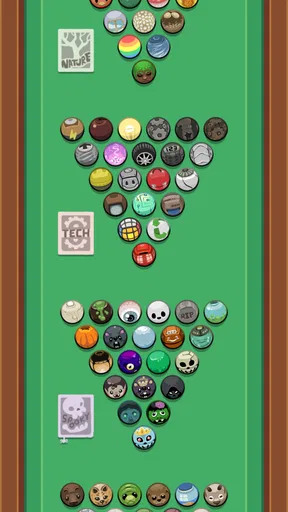
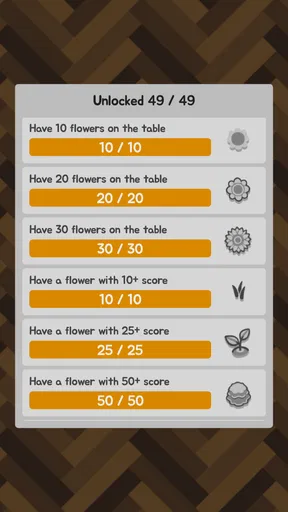

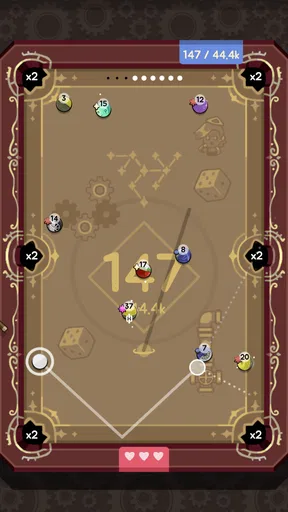
 Analysis by AppCompare
I expected Ultrapool to be a quick pool game and little more, but its roguelike structure changes the way I approach every table. Instead of treating each shot as an isolated match, I found myself thinking about momentum, risk, and whether a short-term advantage was worth making the next challenge harder. That shift gives this free strategy game a stronger first impression than a conventional pool app.
My early experience was especially appealing because the basic idea is immediately understandable. You still need to read angles, control power, and avoid careless shots, but the surrounding progression makes a familiar sport feel less predictable. The result is a game that is easy to pick up during a spare moment while still asking for more attention than a simple arcade pool title.
That combination explains why the game has attracted a 4.8 average from around 1.3 thousand ratings and passed 50 thousand installs. Those numbers suggest that the unusual mix is connecting with players, but they do not answer the more important question: does the novelty survive after the first few sessions? After spending time with it, I think the answer depends heavily on what you want from a mobile strategy game.
Why the first week feels so inviting
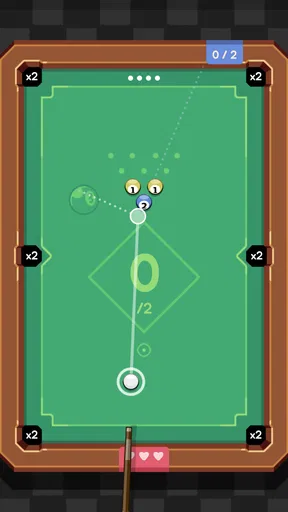
The strongest part of the opening experience is how little explanation the concept needs. Pool already supplies a clear physical language: the cue direction, the angle of the shot, the amount of force, and the position of the balls all matter. The roguelike layer adds consequences around those decisions without requiring me to learn a completely unfamiliar control system.
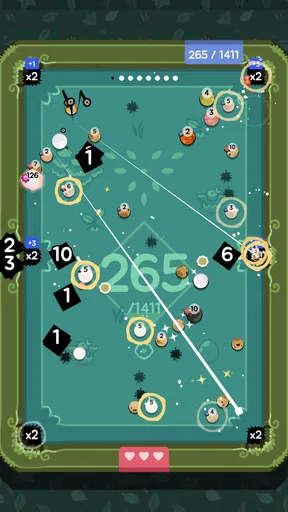
I enjoyed the way this encourages a different rhythm from ordinary pool games. In a standard match, I might focus only on clearing the current table. Here, I am more conscious of preserving a good position and avoiding a reckless attempt that could damage the run. That makes even a simple shot feel like part of a larger plan rather than a disposable move.
The first few sessions are also useful for discovering how patient I need to be. New players may instinctively aim for the most impressive shot, especially when a bank or difficult combination looks possible. I found that safer positioning usually teaches more than chasing spectacular results. A modest shot that leaves a manageable next angle can be more valuable than a successful trick that creates an awkward follow-up.
That is one of the game’s less obvious strengths: it rewards thinking beyond the ball currently in front of you. I started checking the likely next shot before committing to the present one. This habit is useful for anyone who enjoys strategy games but does not necessarily want a complex menu of units, resources, or statistics.
Worth Reading Before You Choose

Baby Panda World Brings Quick Play to Modern Phones, but Its Game Library Feels Busy

ESPN’s Live Game View Makes Following Close Games Easier

QuizzLand Review: A Good Fit for Short Trivia Breaks, Not Every Player

Basketball Stars: Multiplayer Is Fast, but Can It Recover When Matches Go Wrong?

WEBTOON Turns Phone Updates Into a Better Reading Routine

Link to Windows Runs on Shared Habits, Not Social Feeds
The controls are likely to be the deciding factor for some players. Pool depends on precision, and any mobile interface can make fine adjustments feel less natural than playing with a physical cue. I recommend beginning with controlled, low-risk attempts rather than trying to imitate advanced trick shots immediately. Learning how the game translates a small adjustment into a changed angle is part of the early progression.
Because the game is free, it is easy to try without turning the first session into a financial decision. The content rating is Everyone, which also makes it a straightforward choice for players looking for a light strategy game without an adult-oriented presentation. The developer is offbrand games, and the current release is version 0.14.13, so the experience has the feel of a project that is still being refined rather than a huge, fully established pool platform.
A practical routine for new players
My most useful first-week routine was simple. I would begin by taking a moment to identify the easiest reliable shot, then consider where the cue ball would finish, and only afterward decide whether a more ambitious option was worthwhile. This sounds basic, but the roguelike context makes that order important. It prevents the excitement of a difficult shot from taking over the whole decision.
I also learned not to judge a run by one bad turn. A missed shot can feel costly, but rushing the next attempt usually compounds the problem. Resetting my attention after a mistake helped more than trying to recover immediately with another aggressive play. That mindset is a good fit for players who like games where adaptation matters more than memorizing a fixed sequence.
For a realistic everyday scenario, I can see myself opening Ultrapool while waiting for a train or taking a short break between tasks. One run can provide a focused activity without the commitment of a long multiplayer match. The catch is that a difficult or unlucky sequence can make the break feel more intense than relaxing, so I would not choose it when I want a completely mindless distraction.
What remains valuable after the novelty fades
The month-to-month question is more complicated. The initial hook is clear, but lasting value depends on whether the strategic decisions continue to feel meaningful once the basic relationship between pool and roguelike progression becomes familiar. For me, the answer is positive when I approach it as a compact decision-making game rather than as a complete replacement for a traditional pool simulator.
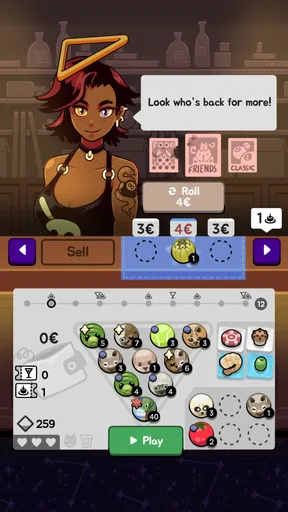
Its recurring appeal comes from the tension between consistency and experimentation. A safe approach can keep a run stable, while a riskier choice may create a better opportunity if it succeeds. That trade-off gives repeated sessions a reason to exist: I am not only replaying the same sport, I am testing whether a different attitude toward risk produces a better result.
Still, this is not the same kind of long-term motivation offered by a deep competitive pool game. Players who want detailed online competition, a large social community, formal tournaments, or highly realistic simulation may find a dedicated billiards alternative more satisfying. Ultrapool is better suited to someone who enjoys short strategic runs and the feeling of making imperfect decisions under pressure.
I also would not recommend it as the only game on a phone for someone who needs constant variety. The central interaction remains pool, and the roguelike twist can change the context more readily than it changes the physical act of aiming and shooting. If the table itself stops being enjoyable, the extra layer may not be enough to restore interest.
On the other hand, that focused design is exactly why it works well as a secondary game. I can play it in small bursts, return after a few days, and understand the basic objective without relearning a complicated system. The game does not ask me to maintain a large collection, manage a long checklist, or remember a sprawling story. Its recurring value comes from the quality of the next decision.
How it compares with ordinary pool games
Compared with a conventional pool app, this game is less about reproducing a complete match and more about turning each table into a problem inside a run. A traditional alternative is the better choice when I want a calm practice session, realistic rules, or a familiar competitive format. Ultrapool is the better choice when I want the table to carry strategic consequences beyond the current rack.
Compared with other mobile roguelike games, it has a gentler entry point because the core action is immediately recognizable. I do not need to understand a complicated combat system before I can make a meaningful move. The trade-off is that its strategic variety is tied to pool’s physical vocabulary. Someone seeking a huge range of character builds or radically different encounters should look elsewhere.
The game also differs from a purely arcade pool title. Arcade alternatives often prioritize speed, spectacle, or generous feedback. Here, I get more satisfaction from planning and restraint. That can make the experience feel more rewarding when I am in a thoughtful mood, but less exciting when I only want instant action.
Where the maintenance burden appears
One advantage of Ultrapool is that it does not seem to require a demanding personal routine. I do not need to check in at a particular time to understand what I am doing, and the basic skill of reading a shot remains useful whenever I return. That makes it easier to keep installed than games built around constant reminders or daily obligations.
However, low maintenance does not mean zero friction. Precision games can punish a player who comes back after a long break because touch control sensitivity and aiming judgment may feel rusty. I found that the first few attempts after time away were better treated as warm-up shots. Expecting immediate peak performance made the return more frustrating than it needed to be.
The current version, 0.14.13, is another reason I would keep expectations realistic. A game at this stage may feel more experimental than a mature, feature-heavy alternative. That is not automatically a weakness; it can make the core idea feel fresh. But players who prefer polished ecosystems with years of accumulated modes and refinements may be happier with an established pool game.
There is also a financial consideration. The game itself is free, while in-app purchases are listed at $5.99 per item. I appreciate being able to test the central experience without paying first, but anyone sensitive to optional spending should decide in advance whether those purchases fit their budget. The smartest approach is to evaluate the free gameplay on its own terms rather than assuming that buying something will solve every difficulty or make the long-term loop automatically deeper.
For me, the maintenance burden is therefore mostly mental rather than administrative. I need to return with enough patience to think through a shot. If I open it while distracted and play too quickly, the game can feel harsher than it really is. A focused five-minute session suits it better than hurried tapping between notifications.
What may cause fatigue over repeated runs
The main source of fatigue is the possibility that the novelty of combining pool with roguelike structure may wear thin before the underlying shooting remains fresh. Once I understand the safest patterns, I may start feeling that I am repeating a familiar decision cycle. The game’s appeal is strongest when I still care about improving my judgment, not when I am merely trying to clear another table.
Failure can also become tiring if it feels caused by imprecise touch input rather than by a decision I knowingly made. In a strategy game, I want to learn from a mistake. In a precision game, a disappointing result can be harder to interpret: did I choose poorly, aim slightly off, or misjudge the force? That uncertainty can make practice feel less satisfying for players who prefer transparent, highly controlled systems.
Another possible weakness is the tension between short sessions and emotional investment. The game is convenient because it can fit into a small break, but a run that ends at an inconvenient moment may leave me wanting one more attempt. That is enjoyable when I have time, yet irritating when I am using the app specifically because I need something brief.
Players who dislike repeating attempts should think carefully before installing it. The roguelike format naturally makes repetition part of the experience, and the pleasure comes from adjusting after each run. If I want steady progress with little backtracking, a straightforward pool campaign may be a better match.
I also think the game is less suitable for people who want a social reason to return. Its strongest appeal, as I experienced it, is personal decision-making: choosing when to play safely, when to take a chance, and how to recover from a poor position. Someone motivated mainly by friends lists, direct competition, or shared events may not find enough recurring energy here.
Small choices that improve the experience
One useful technique is to separate aiming practice from run ambition. When I am learning the feel of a shot, I should not simultaneously demand a perfect outcome from the run. Treating early attempts as information makes mistakes less costly emotionally and helps reveal which situations deserve caution.
A second technique is to use the next position as the deciding factor. The most attractive pocket is not always the best target if the cue ball will finish in a difficult area. Looking one move ahead turns the game from simple target selection into genuine table management, and it is where the strategy layer feels most distinct.
A third trade-off is knowing when to stop. After several failed runs, I often become more aggressive because I want to compensate for lost progress. That usually makes my decisions worse. Ending the session and returning later is not a weakness here; it protects the careful thinking that gives the game its value.
Finally, I would avoid comparing every session with a personal best. The game is more enjoyable when I treat each return as a chance to test a choice or improve consistency. That approach gives the compact format a sustainable habit instead of turning every short break into a performance check.
My long-term verdict on keeping it installed
Ultrapool earns lasting space on my phone if I want a free strategy game that can be understood quickly but rewards more careful play than its simple premise suggests. Its best quality is not merely the novelty of putting roguelike ideas around pool. It is the way that structure makes positioning, patience, and risk assessment matter from one shot to the next.
I would recommend it to pool fans who want a different format, roguelike players looking for a more tactile change of pace, and anyone who enjoys compact games built around repeated improvement. It is also a good fit for short breaks when I want something interactive rather than passive, provided I am in the mood to concentrate.
I would skip it if my priority is a full billiards simulator, a large multiplayer scene, a deep collection system, or a game that stays exciting without asking me to repeat and refine decisions. The free entry makes trying it easy, but the long-term test is personal: do I enjoy thinking about the next shot even after the original surprise has gone?
My answer is yes, with limits. I would keep it as a focused side game rather than make it my main mobile pastime. The 4.8 average and growing player base reflect a strong reception, while the Everyone rating and free access lower the barrier to trying it. At the same time, the $5.99-per-item purchases and the still-developing version make it sensible to judge the core loop first and spend only if the game has already become part of your routine.
In the end, Ultrapool succeeds because it gives ordinary pool decisions a longer shadow. A shot is not only about whether the ball drops; it is about what that success or failure does to the rest of the run. That idea is strong enough to outlast the first-week novelty for thoughtful players, but not broad enough to satisfy everyone. I recommend giving it a fair trial, playing slowly, and keeping it installed only if the act of planning the next table continues to feel rewarding.
Pros
- Simple pool gameplay that is easy for new players to understand.
- Quick matches suit short gaming sessions on mobile devices.
- Competitive play can provide a good challenge for experienced players.
- Lightweight design may run smoothly on many Android and iOS devices.
- Pool mechanics offer satisfying control once aiming is mastered.
Cons
- Limited variety may make the experience feel repetitive over time.
- Online competition can depend heavily on the quality of your connection.
- Some features or content may require in-app purchases to access fully.
- Precise shots can be difficult on smaller phone screens.
- Progress may feel slow for players who prefer faster unlocks.
FAQs for Ultrapool
What is Ultrapool and how does the game work?
Ultrapool is a casual pool game designed for players who enjoy quick matches on a mobile device. It generally focuses on aiming, adjusting shot power, and using realistic ball physics to clear the table or defeat an opponent. Before downloading, check the store description because available modes, rules, progression systems, and online features may vary between Android and iOS versions or change after updates.
Can I play Ultrapool without an internet connection?
Whether Ultrapool works fully offline depends on the version installed and the specific game mode you want to use. Practice or single-player features may be available without a connection, while online matches, leaderboards, advertisements, cloud saving, or account verification may require internet access. It is worth testing the game in airplane mode after installation if offline play is important to you.
Does Ultrapool include multiplayer or online matches?
Ultrapool may offer competitive features that let players challenge opponents, but users should confirm the current multiplayer options on the official app-store listing. Online play can require a stable connection and may involve matchmaking, rankings, invitations, or separate game modes. Keep in mind that the quality of matches can depend on regional availability, server activity, and the number of active players.
Is Ultrapool free to download, and does it contain purchases or advertisements?
Ultrapool may be available as a free download, but free access does not always mean that every feature is unrestricted. Many mobile games use advertising, optional purchases, virtual currency, cosmetic items, or paid upgrades. Before installing, review the Google Play or App Store information for in-app purchase details, subscription conditions, and whether advertisements can be removed through a paid option.
What devices and permissions are required to install Ultrapool?
Compatibility requirements can differ according to the Android or iOS version, device model, and game updates. Check the official store page for the minimum operating-system version, download size, and available storage needed for installation. Ultrapool may request permissions related to notifications, network access, or purchases. Review these requests carefully and avoid granting permissions that do not seem necessary for the features you intend to use.


